
When discussing the future of gaming in 2026, the phrase playstation 6 is not many years away leaks has been dominating the internet, signaling a massive shift in Sony’s hardware strategy. While early industry speculation suggested that economic challenges might push the next generational transition deep into late 2028 or beyond, recent data mining and insider reports paint a vastly different picture. According to prominent leakers, particularly the well-known hardware analyst Moore’s Law is Dead, Sony is not just preparing for an imminent release of the PlayStation 6, but they are also building an ecosystem that includes a dedicated handheld device and an innovative software delivery system.
محتويات الموضوع
Part 1: The Handheld Trojan Horse and Power Saver Mode
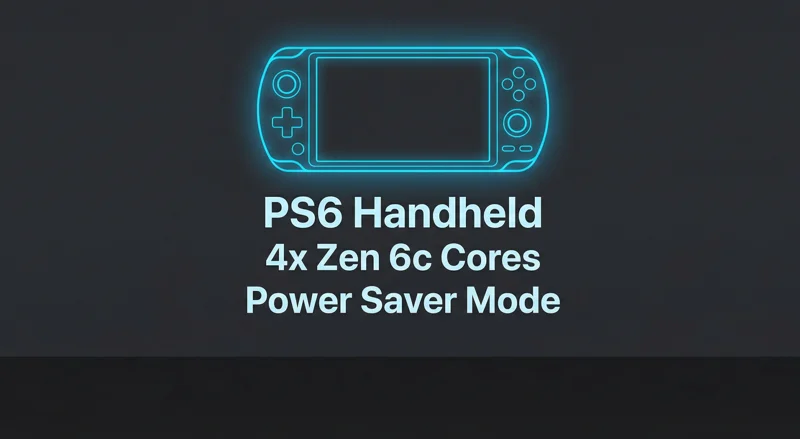
The most compelling evidence of Sony’s accelerated timeline comes from hidden developer guidelines within current software development kits. Recent updates have introduced developers to a new “Power Saver Mode.” On the surface, this might seem like a simple eco-friendly initiative for current-generation consoles. However, deep dives into the threading guidelines reveal specifications that mirror a portable device rather than a traditional home console.
“Work on Power Saver Mode is proceeding in a way that makes it 100% clear that it is a Trojan Horse for supporting a PlayStation 6 handheld.”
The leaked developer guidelines instruct creators on how to optimize core threading specifically for this mode. The configuration—utilizing 4 x Zen 6c Cores yielding 8 threads for gaming tasks, alongside 2 x Zen 6 Low Power Cores for system operations—aligns perfectly with modern handheld architecture. Experts note that simply reducing thread counts does not yield significant power savings on standard desktop or console hardware compared to underclocking. Therefore, dedicating an entirely new asset management and threading profile only makes logical sense if developers are secretly compiling games for a less powerful, battery-dependent sibling to the PS6.
| Hardware Profile | Core Architecture Rumors | Primary Function |
|---|---|---|
| Base PlayStation 6 | Advanced AMD Zen 6 (Custom) | High-fidelity 4K/8K home console gaming |
| PS6 Handheld (Power Saver) | 4x Zen 6c + 2x Zen 6 LP | Portable, native next-gen compatibility |
Part 2: ‘PlayGo’ Smart Delivery and Cheaper Manufacturing
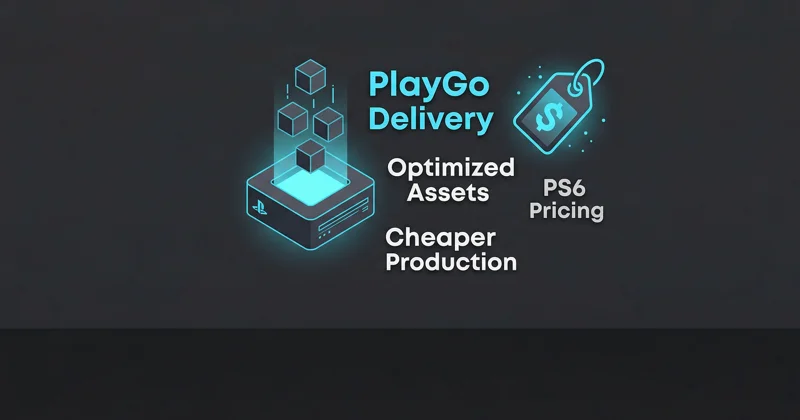
Another massive puzzle piece pointing toward an imminent launch is the introduction of ‘PlayGo’ in the PS5 SDK 13. Sony’s answer to Xbox’s Smart Delivery, PlayGo is a revolutionary asset-packaging system designed to optimize storage and download times. For years, PlayStation users have had to download bloated files containing massive 4K textures meant for Pro consoles, even if they were playing on base hardware.
With PlayGo, developers can now segment game files into specific “chunks.” The console will query the server and download only the exact texture packs and assets required for that specific hardware profile. Currently, the SDK allows targeting for PS4, PS5, PS5 Pro, and critically, the aforementioned “Power Saver Mode.”
“You save no energy by using smaller textures. This mode is the foundation of a new console that needs its own specific tweaks.”
This granular level of asset management is a strong indicator of a multi-SKU generation. By ensuring the handheld device only downloads compressed, lower-resolution assets, Sony is managing the strict storage limitations inherently found in portable devices. You can read more about standard PlayStation network features and SDK updates on the Official PlayStation Blog.
| Target Hardware | PlayGo Asset Delivery Strategy |
|---|---|
| PS5 Pro / Base PS6 | Uncompressed 4K textures, ray-tracing data packs |
| PS6 Handheld | Compressed 1080p/1440p assets, reduced file size |
The Cost Factor: Cheaper Than You Think
Perhaps the best news to emerge from these next-gen Sony console rumors is the estimated pricing. Following the trend of increasingly expensive hardware, gamers have been bracing for a potential $1,000 console. However, insiders report that the base PlayStation 6 and its handheld counterpart have been designed from the ground up to be cost-effective. By utilizing highly efficient architectures, Sony can employ vastly cheaper cooling solutions and lower-wattage power supplies.
Current estimates suggest that the bill of materials (BOM) for the base PS6 could hover around $750. With reasonable subsidies, Sony could easily price the PlayStation 6 below the cost of the current PS5 Pro, making the next generational leap highly accessible to a wider audience.
Frequently Asked Questions (FAQs)
When is the PlayStation 6 expected to release?
While early estimates suggested 2028, recent leaks indicate an accelerated timeline, meaning the console could be officially announced or released much sooner.
Is Sony releasing a handheld console with the PS6?
Yes, multiple hardware leaks and the discovery of a “Power Saver Mode” in developer kits strongly point to a native handheld companion device.
What is Sony’s PlayGo feature?
PlayGo is an intelligent asset delivery system that allows a console to download only the specific textures and files it needs, saving massive amounts of storage space and bandwidth.
Will the PlayStation 6 be extremely expensive?
Current reports suggest the opposite. The console is reportedly designed with cost-effective components, potentially making it cheaper than the PS5 Pro.
What does “Power Saver Mode” mean in the leaked SDKs?
Leakers believe “Power Saver Mode” is actually a disguised compatibility layer or profile meant specifically for developers to optimize games for the upcoming handheld hardware.
What processors will the new handheld use?
Leaks point to an APU utilizing 4 x Zen 6c Cores for gaming and 2 x Zen 6 Low Power Cores for system background tasks.
Will the PS6 support backward compatibility?
Given Sony’s recent history and the integration of the PlayGo system managing assets across PS4 and PS5, robust backward compatibility is highly expected for the PS6 generation.
Disclaimer: This article is for informational purposes only. The details discussed are based on industry leaks, rumors, and data mining, and have not been officially confirmed by Sony Interactive Entertainment. Final hardware specifications, release dates, and pricing are subject to change.